

Pediatric & Congenital Ear Reconstruction
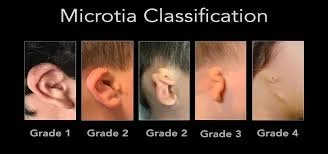
Microtia Reconstruction
Microtia is a congenital condition in which the external ear is underdeveloped or incompletely formed. The degree of ear development can vary significantly, from a relatively small ear with recognizable structures to a severely underdeveloped ear or complete absence of the visible external ear.
For children with microtia, ear reconstruction focuses on creating an external ear with natural proportions, three-dimensional definition, appropriate projection, and symmetry with the opposite ear.
Dr. Stephen Park provides reconstructive surgery for children with congenital ear deformities, including microtia and ear reconstruction. Depending on the child's anatomy, age, overall health, and family preferences, treatment may involve staged reconstruction using the child's own rib cartilage or other reconstructive approaches.
A Personalized Approach to Ear Reconstruction
Every child with microtia is different. Treatment planning takes into consideration:
The degree and type of microtia
The amount of available skin and soft tissue
The shape and development of the opposite ear
The presence of aural atresia or hearing loss
The child's age and physical development
Previous ear surgery
The family's goals and expectations
Microtia reconstruction is often performed in stages. When rib cartilage reconstruction is selected, the surgeon carefully shapes the patient's own cartilage into an ear framework and positions it beneath the skin. Additional procedures may be performed to refine the ear's projection, contour, and definition.
Microtia and Hearing
Microtia may occur together with aural atresia, in which the ear canal is absent or severely underdeveloped. Because the external ear and ear canal are separate anatomical structures, children with microtia should receive an appropriate hearing evaluation.
When microtia and aural atresia occur together, the reconstructive plan should be coordinated with the child's hearing and ear canal treatment.
The goal of reconstruction is not simply to create an ear, but to restore a natural-looking ear that is proportionate to the child's face and harmonious with the opposite side.
Ear Creation & Reconstruction
The external ear is a complex three-dimensional structure made up of delicate cartilage, skin, and soft tissue. When part or all of the ear is absent or severely deformed, reconstruction requires careful planning to recreate its natural shape, position, projection, and proportions.
Dr. Stephen Park specializes in facial plastic and reconstructive surgery, including congenital ear reconstruction and ear creation.
Recreating the Shape of a Natural Ear
Successful ear reconstruction involves more than creating an ear-shaped structure. The reconstructed ear must be carefully designed to match the size, position, projection, and overall appearance of the opposite ear.
Depending on the individual patient's anatomy, reconstruction may involve:
Creating a three-dimensional cartilage framework
Using the patient's own rib cartilage
Reconstructing the helix and antihelix
Creating the conchal bowl
Establishing appropriate ear projection
Refining the relationship between the ear and scalp
Elevating and defining the reconstructed ear
Staged Reconstruction
Complex ear reconstruction is often performed in stages. The initial procedure focuses on creating the fundamental ear framework, while subsequent procedures may refine the ear's projection, contours, and surrounding soft tissue.
Treatment is individualized according to the patient's anatomy, age, previous procedures, and reconstructive goals.
Restoring More Than Appearance
The external ear plays an important role in facial balance and symmetry. Reconstruction aims to create an ear that looks natural from the front, side, and three-quarter views while maintaining appropriate proportions with the face.
For children with associated ear canal abnormalities or hearing loss, reconstructive planning may be coordinated with pediatric otology and hearing specialists.
Otoplasty & Ear Deformity Correction
Otoplasty is a surgical procedure used to improve the shape, position, or proportion of the external ear.
It is commonly performed for prominent ears, ears that project too far from the head, or certain congenital ear shape abnormalities.
Unlike microtia reconstruction, otoplasty is generally performed when the ear has developed most of its normal cartilage but its shape or position is not ideal.
What Can Otoplasty Correct?
Depending on the individual anatomy, otoplasty may address:
Prominent or protruding ears
Excessive ear projection
Asymmetry between the ears
Abnormal cartilage folds
Certain congenital ear deformities
Ear shape concerns following previous surgery
During surgery, the cartilage is carefully reshaped and repositioned to create a more natural relationship between the ear and the head. Incisions are generally placed behind the ear so that the resulting scars are less visible.
Timing of Otoplasty
Children are commonly considered for otoplasty once the ear has reached sufficient development. UVA notes that pediatric otoplasty is often performed around 5–7 years of age, although otoplasty can also be performed in adolescents and adults.
The appropriate timing depends on the child's individual anatomy, development, and circumstances.
Natural, Balanced Results
The goal of otoplasty is not to create perfectly identical ears. Instead, the procedure aims to improve symmetry, proportion, and the natural relationship between the ears and the face.
Infant Ear Molding
Infant ear molding is a non-surgical treatment that can gently reshape certain congenital ear deformities during the first weeks of life.
A newborn's ear cartilage is soft and highly moldable. When the ear has developed normally but the cartilage folds or position are abnormal, a customized molding system can guide the ear toward a more natural shape.
Who May Benefit?
Ear molding may be considered for infants with certain deformities such as:
Prominent ears
Helical rim deformities
Lop or folded ears
Conchal crus deformities
Cryptotia
Other congenital ear shape abnormalities
Ear molding is different from microtia reconstruction. It generally requires that the ear cartilage and skin are present but that the ear has an abnormal shape or folding pattern.
Why Timing Matters
The opportunity for ear molding is time-sensitive because newborn cartilage gradually becomes firmer during the first weeks of life.
For this reason, parents who notice an unusual ear shape at birth are encouraged to seek an evaluation as early as possible.
Treatment may involve placing a customized mold and soft retractors around the ear to gradually guide the cartilage into a more natural position. The molding system is adjusted periodically as the ear changes shape.
A Non-Surgical Approach
When successful, infant ear molding may improve the shape of the ear without requiring surgery later in childhood.
Because every ear deformity is different, an examination by an experienced pediatric facial plastic surgeon is important to determine whether molding is appropriate.
If the ear is missing significant cartilage or is severely underdeveloped, as in microtia, ear molding is generally not an appropriate treatment.