

ar Aesthetics
Natural Shape. Balanced Proportion. Refined Ear Contours.
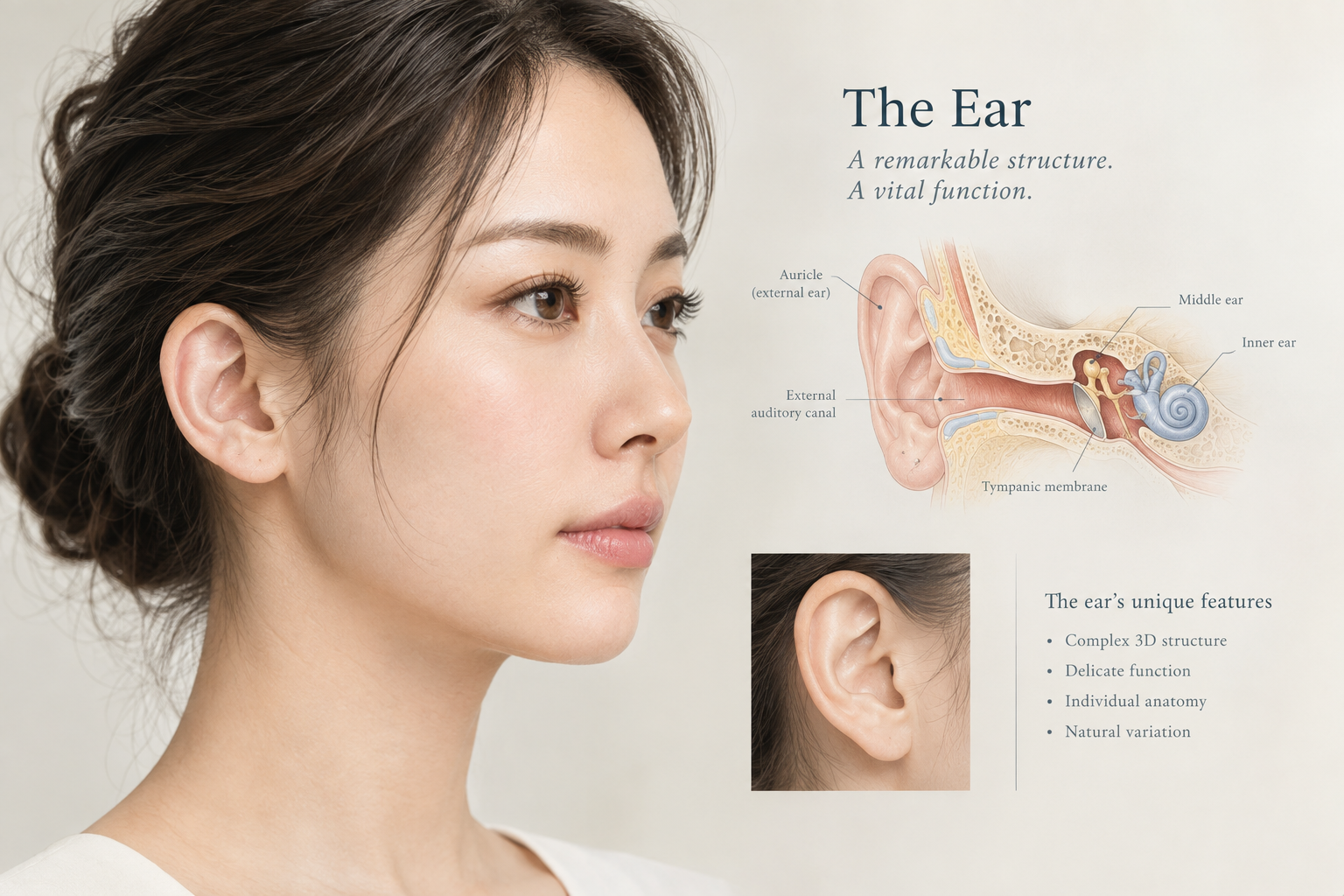
The ears play an important role in facial balance and overall appearance. Even subtle differences in ear position, size, or shape can influence the way the face is perceived.
Ear aesthetics focuses on improving the shape, position, projection, and proportion of the external ear while preserving a natural appearance.
Dr. Stephen Park approaches ear surgery with careful attention to the underlying cartilage framework, facial proportions, symmetry, and the individual characteristics of each patient's ears.
Treatment may include otoplasty, ear pinning, or ear reshaping, depending on the patient's anatomy and goals.
Otoplasty
Otoplasty is a surgical procedure designed to reshape and reposition the external ear.
It can address ears that project too far from the head, differences in ear shape or position, underdeveloped cartilage folds, or other aesthetic concerns involving the external ear.
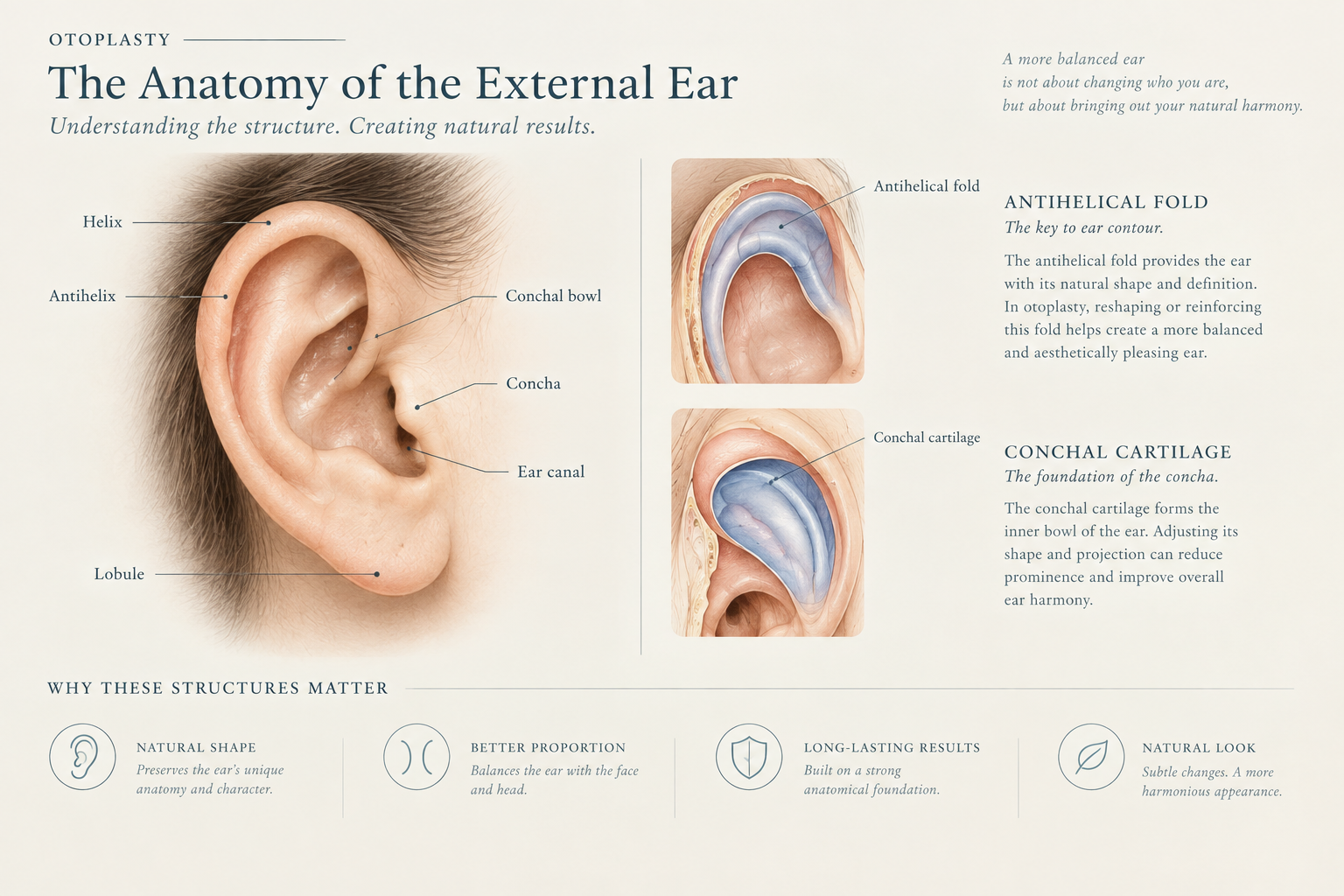
Depending on the patient's anatomy, treatment may involve reshaping the cartilage, creating or refining the natural folds of the ear, repositioning the ear closer to the head, or adjusting the contour of the conchal bowl.
The goal is not to create identical ears or an artificially “pinned” appearance.
Instead, the objective is to create a natural ear position and shape that complements the patient's face.
Ear Pinning
Ear pinning is a common term for otoplasty performed to reduce excessive ear projection.
When the ears extend farther from the head than desired, carefully reshaping and repositioning the cartilage can bring the ears into a more balanced relationship with the head and face.
Ear pinning may involve:
Creating or strengthening the antihelical fold
Repositioning the conchal cartilage
Reducing excessive conchal depth when appropriate
Adjusting the overall projection of the ear
Improving differences between the two ears
The objective is a natural transition from the ear to the side of the head, rather than an overly tight or flattened appearance.
[IMAGE 03 — EAR PINNING CONCEPT]
Image content:
A simple medical illustration showing:
Prominent Ear → Cartilage Reshaping → Natural Ear Position
Use a side-view diagram.
The illustration should show the change in the auriculocephalic angle and ear projection without making the result look exaggerated.
Suggested visual labels:
Ear Projection
Cartilage Framework
Natural Position
Ear Reshaping
Not every patient seeking ear surgery wants the ears simply brought closer to the head.
Ear reshaping can address differences in the size, contour, projection, or symmetry of the external ear.
Depending on the individual anatomy, treatment may address:
Ear Shape
Refining irregular or poorly defined cartilage contours.
Ear Projection
Reducing excessive prominence while maintaining a natural relationship with the head.
Ear Symmetry
Improving noticeable differences between the two ears.
Cartilage Folds
Creating or refining the natural folds that define the three-dimensional shape of the ear.
Earlobe Proportion
Selected patients may also benefit from correction of an enlarged, elongated, or disproportionate earlobe.
The specific surgical approach is determined by the anatomy of each ear rather than by a single standardized technique.
[IMAGE 04 — EAR RESHAPING]
Image content:
A front/side/three-quarter anatomical illustration showing how different cartilage structures influence the final ear shape.
Use subtle overlays:
Shape → Projection → Symmetry → Proportion
Creating Natural Ear Contours
The external ear is a three-dimensional structure made up of multiple cartilage folds and curves.
Successful ear reshaping requires more than simply moving the ear backward.
The surgeon must consider the relationship between the helix, antihelix, concha, lobule, and surrounding facial structures.
The goal is to preserve the natural three-dimensional character of the ear while improving its overall balance.
[IMAGE 05 — 3D EAR CARTILAGE]
Image content:
A high-quality 3D medical illustration of the auricular cartilage framework.
Show:
Helix
Antihelix
Scapha
Concha
Tragus
Lobule
Use a semi-transparent outer skin layer so the underlying cartilage framework can be appreciated.
This should be one of the highest-quality medical illustrations on the page.
Ear Symmetry and Facial Balance
Perfectly identical ears are uncommon.
Small differences in ear size, shape, projection, and position are normal. The goal of aesthetic ear surgery is therefore not absolute symmetry, but improved balance and harmony.
During consultation, Dr. Park evaluates both ears individually and considers their relationship to the rest of the face.
[IMAGE 06 — FACIAL BALANCE]
Image content:
A frontal facial illustration with subtle horizontal reference lines demonstrating:
Eye Level → Ear Position → Facial Midline
Then show how ear position contributes to overall facial balance.
This image should make the point that ear aesthetics is part of facial aesthetics, rather than an isolated ear procedure.
Who May Consider Ear Aesthetics?
Otoplasty and ear reshaping may be considered by patients who are concerned about:
Prominent ears
Asymmetrical ears
An underdeveloped antihelical fold
Excessive conchal projection
Unusual ear shape
Disproportionate ear size
Earlobe appearance
Changes following previous injury or surgery
Otoplasty can be performed in children, adolescents, and adults when the ears are sufficiently developed and the patient is an appropriate candidate for surgery.
For children, the decision should also consider the child's readiness and willingness to participate in the recovery process.
[IMAGE 07 — AGE RANGE]
Image content:
A tasteful series of three silhouettes:
Child → Adolescent → Adult
with an external-ear profile beside each.
Do not use stock photographs of identifiable children unless appropriate consent and licensing are available.
A Personalized Approach to Ear Surgery
Every ear has its own anatomy.
Before surgery, Dr. Park evaluates:
Ear size
Ear projection
Cartilage structure
Antihelical fold
Conchal shape
Ear symmetry
Earlobe proportions
Relationship between the ear and the face
Previous surgery or injury
Standardized photographs may be used during the planning process to evaluate the ears from multiple views.
The surgical plan is then individualized according to the patient's anatomy and goals.
[IMAGE 08 — CONSULTATION / PLANNING]
Image content:
Dr. Park reviewing standardized ear photographs or examining a patient's ears during consultation.
Purpose:
Communicate careful planning and individualized treatment—not a “quick cosmetic procedure.”
Otoplasty Before & After
When appropriate, before-and-after photographs can demonstrate changes in ear projection, shape, and symmetry.
For clinical photography, photographs should be standardized and taken from consistent angles.
Recommended views:
Front
Right Profile
Left Profile
Right Three-Quarter
Left Three-Quarter
The focus should be on natural changes in ear position and contour rather than dramatic transformation.
[IMAGE 09 — BEFORE & AFTER GALLERY]
Image content:
Use authentic, consented clinical photographs from Dr. Park's practice.
Recommended layout:
BEFORE | AFTER
with multiple views beneath each case.
Each case should identify:
Patient age or age group, when appropriate
Procedure
Follow-up interval
Important: Do not use AI-generated before-and-after photographs as real patient results.
Natural Results, Individualized to You
The goal of ear aesthetics is not to make every ear look the same.
Each patient has different facial proportions, cartilage characteristics, and aesthetic preferences.
A successful result should look natural from multiple angles and complement the rest of the face.
Otoplasty and ear reshaping are designed to refine the relationship between the ears and the face while preserving the unique character of each patient.
[IMAGE 10 — FINAL RESULT / PORTRAIT]
Image content:
A natural three-quarter facial photograph emphasizing the relationship between the ear and the rest of the face.
Avoid heavily retouched beauty photography.
Ear Aesthetics with Dr. Stephen Park
Otoplasty combines facial aesthetics, cartilage anatomy, and precise reconstructive technique.
Dr. Park's background in Facial Plastic and Reconstructive Surgery allows him to approach ear reshaping with attention to both form and facial harmony.
Whether the concern is prominent ears, asymmetry, or another difference in ear shape, treatment is planned around the individual patient rather than a standardized ideal.
Begin Your Consultation
Discuss your concerns and explore whether otoplasty, ear pinning, or ear reshaping may be appropriate for you.