

Rhinoplasty
Refined Shape. Natural Proportion. Lasting Structure.
The nose is one of the most defining features of the face. Even subtle changes in its shape, size, or position can influence overall facial balance.
Rhinoplasty is a highly individualized procedure that can reshape the nasal bones, cartilage, and soft tissues to improve the appearance and, when appropriate, the function of the nose.
Dr. Stephen Park approaches rhinoplasty with an emphasis on facial proportion, structural support, natural appearance, and individualized treatment planning.
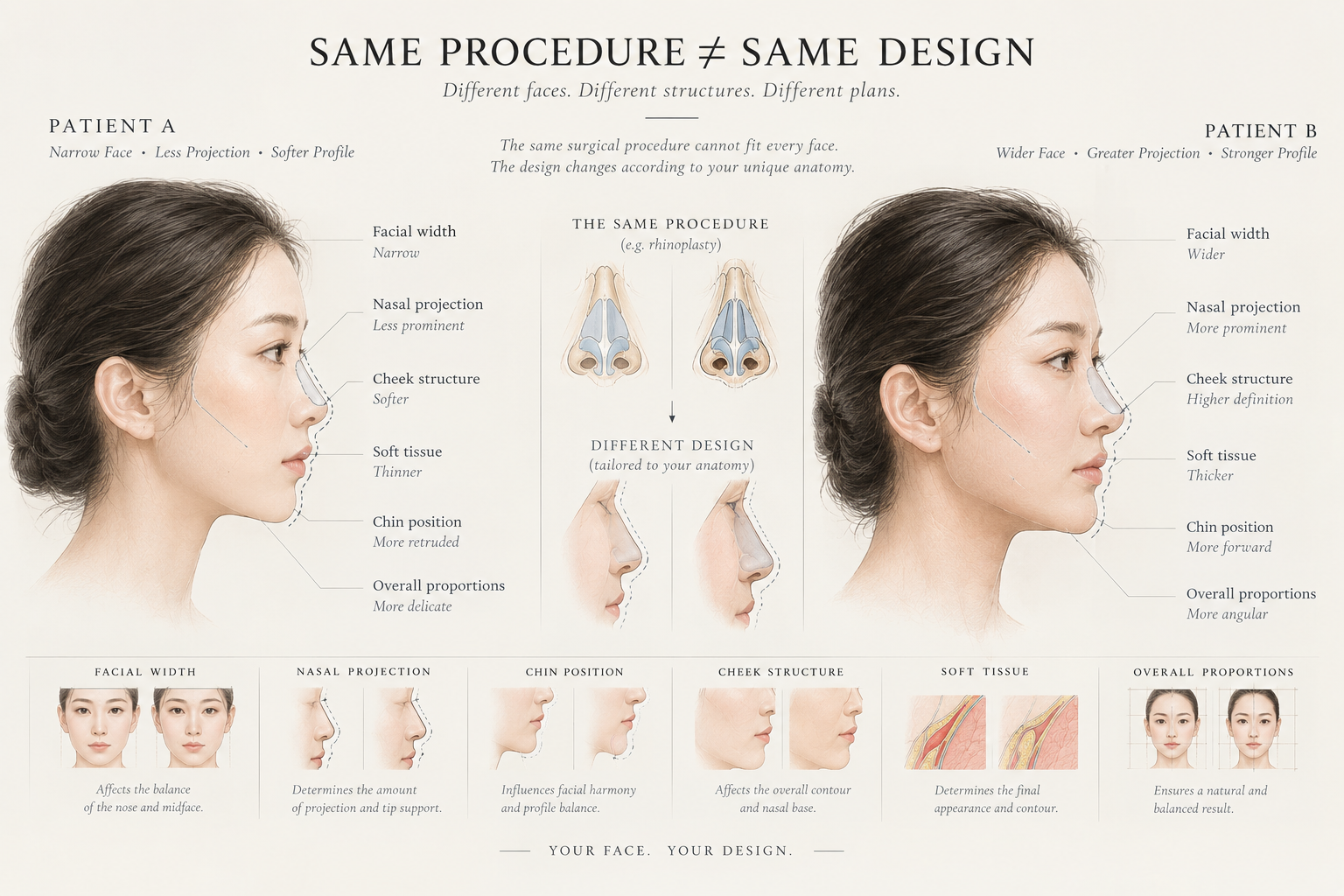
Whether the goal is to refine the nasal tip, straighten the nose, reduce a dorsal hump, improve nasal proportions, or address changes following previous surgery, the treatment plan is tailored to the patient's anatomy and goals.
Cosmetic Rhinoplasty
Cosmetic rhinoplasty is designed to improve the appearance and proportions of the nose while maintaining harmony with the rest of the face.
Depending on the individual's anatomy and goals, rhinoplasty may address:
A dorsal hump or prominent nasal bridge
A broad or narrow nasal bridge
Nasal asymmetry
A crooked or deviated appearance
A bulbous or poorly defined nasal tip
A drooping or overly projected nasal tip
Nasal width or nostril proportions
Overall nasal size and facial balance
The goal is not to create a standardized or “perfect” nose.
Instead, rhinoplasty should create a nose that fits naturally within the patient's individual facial features.
A well-planned rhinoplasty should allow the nose to complement the face rather than become the most noticeable feature.
Refining the Nasal Bridge
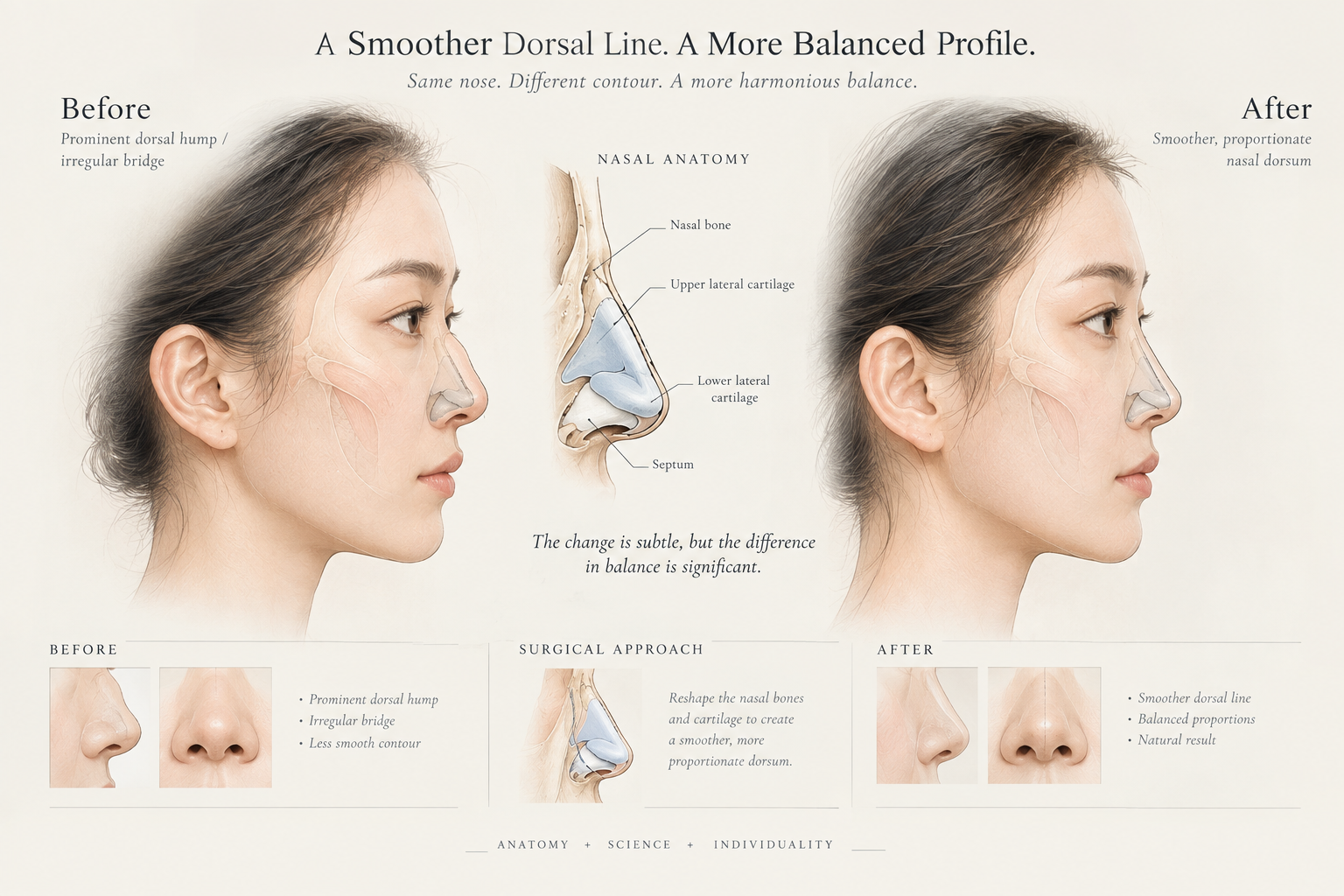
Changes to the nasal bridge can have a significant effect on the overall appearance of the nose.
Depending on the patient's anatomy, rhinoplasty may involve reducing a dorsal hump, straightening the bridge, narrowing the nasal bones, or adding structural support where needed.
The objective is to create a smooth and proportionate transition between the nose and the surrounding facial structures.
Refining the Nasal Tip
The nasal tip plays an important role in the character and balance of the nose.
Rhinoplasty can be used to refine tip definition, adjust projection or rotation, improve symmetry, or address a bulbous or poorly defined tip.
Because the tip is supported by a complex cartilage framework, changes must be carefully planned to preserve structural stability and create a natural appearance.
[IMAGE 04 — NASAL TIP ANATOMY]
Recommended image:
A detailed but elegant illustration of the lower lateral cartilages and nasal tip.
Show how subtle changes in cartilage shape and support can influence:
Tip definition
Projection
Rotation
Symmetry
Revision Rhinoplasty
Revision rhinoplasty is performed when a patient seeks additional correction after previous nasal surgery.
Unlike primary rhinoplasty, revision surgery must account for changes created by the previous procedure, including altered cartilage, scar tissue, structural weakness, asymmetry, or changes that developed during healing.
Revision rhinoplasty can therefore be more complex and may require additional structural support.
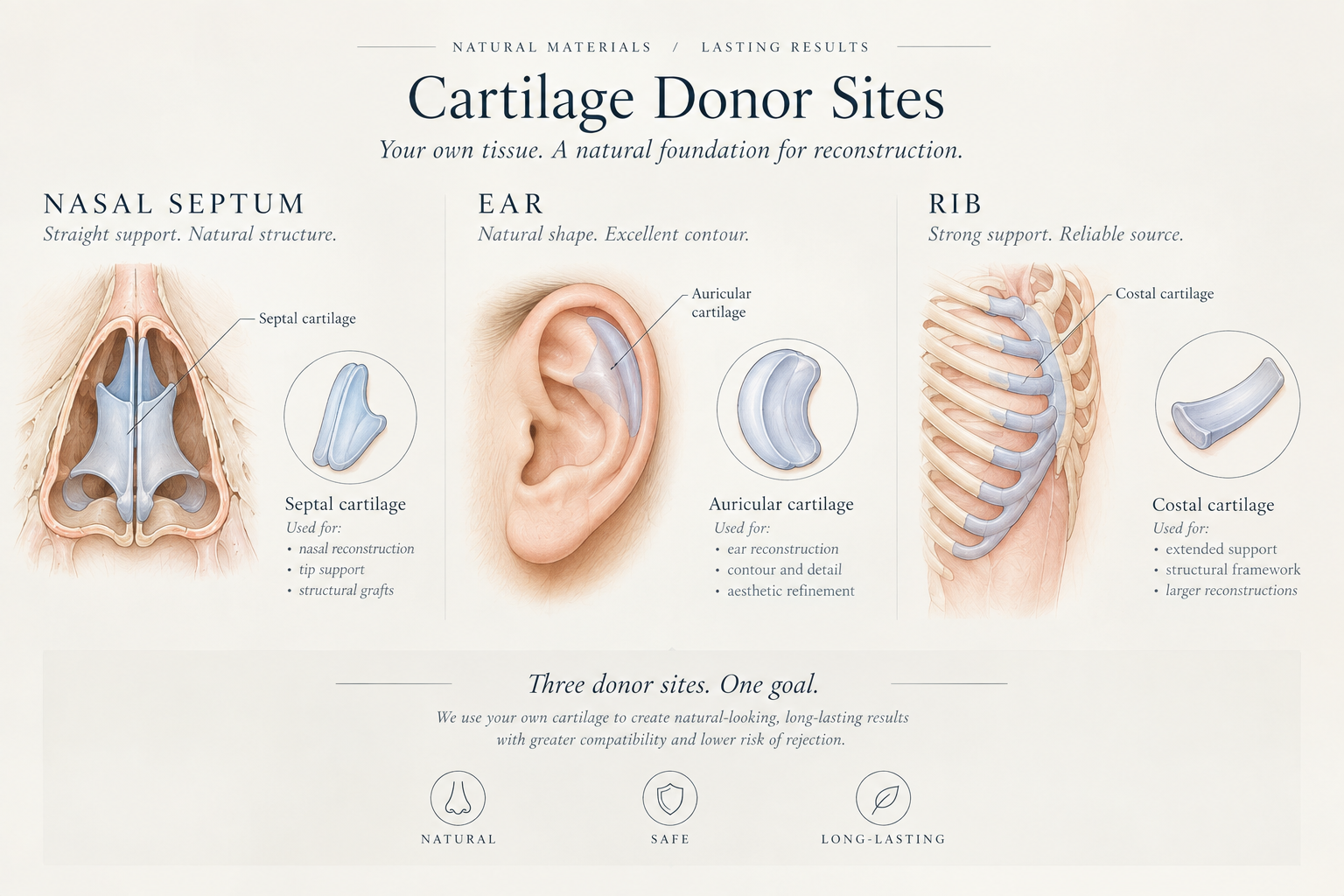
Depending on the patient's individual anatomy, cartilage grafts may be obtained from the nasal septum, ear, or rib when additional structural material is needed.
The goals of revision rhinoplasty may include:
Correcting residual asymmetry
Restoring structural support
Improving nasal contour
Addressing an over- or under-resected nasal bridge
Refining the nasal tip
Correcting postoperative deformity
Improving nasal breathing when structural problems contribute to obstruction
Revision rhinoplasty requires careful analysis of both the external appearance and the underlying nasal framework.
Structural Support in Revision Rhinoplasty
In some revision cases, additional cartilage may be required to rebuild or reinforce the nasal framework.
Possible sources include:
Septal Cartilage
When sufficient cartilage remains available.
Auricular Cartilage
Cartilage from the ear may be considered for selected structural or contouring needs.
Rib Cartilage
In more complex cases requiring substantial structural support, rib cartilage may be considered.
The appropriate graft material depends on the patient's anatomy, previous operations, and reconstructive requirements.

Nose Reshaping
Nose reshaping focuses on improving the overall form and proportions of the nose.
Rather than focusing on a single feature, the surgeon evaluates the nose as part of the entire face.
Depending on the patient's anatomy, nose reshaping may address:
Bridge
Reducing, straightening, narrowing, or augmenting the nasal dorsum.
Tip
Refining, repositioning, or restructuring the nasal tip.
Width
Adjusting the overall width of the nose or nasal bones when appropriate.
Symmetry
Improving visible asymmetry while recognizing that complete symmetry is rarely possible.
Profile
Creating a more harmonious relationship between the nasal bridge, tip, lips, and chin.
Overall Proportion
Creating a nose that complements rather than dominates the face.
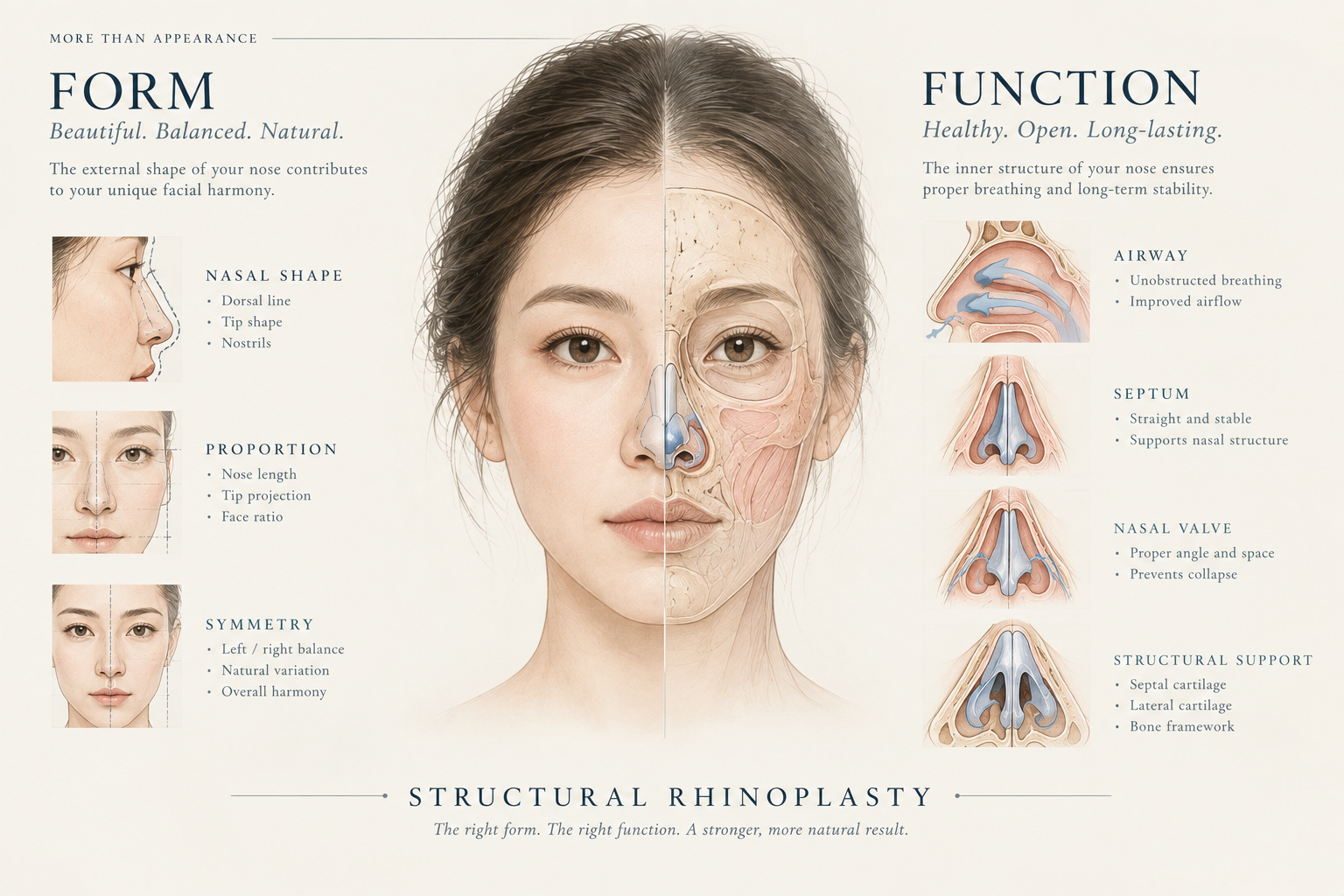
Form and Function
Rhinoplasty is not only about appearance.
The nasal framework also plays an important role in breathing and structural stability. Some patients seek treatment because of nasal obstruction, a deviated septum, nasal valve problems, trauma, or other functional concerns.
When appropriate, cosmetic and functional objectives can be considered together.
Dr. Park's clinical profile includes rhinoplasty, septoplasty, nasal valve surgery, nose reshaping, deviated septum surgery, and nasal obstruction.
A Personalized Approach to Rhinoplasty
Every nose is different.
During consultation, Dr. Park evaluates the nose in relation to the entire face, including:
Nasal bridge
Nasal tip
Nasal width
Facial symmetry
Profile
Nasal airway
Septum
Nasal valve
Skin and soft-tissue characteristics
Previous nasal surgery or trauma
Photographs and, when appropriate, additional assessments can be used to help plan treatment and discuss realistic surgical goals.
The objective is to create an individualized surgical plan rather than apply the same approach to every patient.
Natural Results That Respect Your Face
A successful rhinoplasty should not make every patient look the same.
The goal is to create a nose that is balanced with the patient's existing facial features while maintaining appropriate structural support.
Subtle changes can sometimes make a significant difference in facial harmony.
The final appearance also evolves during healing, and nasal tissues may continue to change for many months after surgery.
Rhinoplasty with Dr. Stephen Park
Rhinoplasty combines facial aesthetics, structural anatomy, and surgical precision.
With extensive training in facial plastic and reconstructive surgery and a longstanding academic focus on rhinoplasty and nasal reconstruction, Dr. Park approaches each case with attention to both the individual patient's goals and the underlying nasal framework.
The goal is a nose that looks natural, functions appropriately, and remains harmonious with the rest of the face.